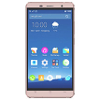
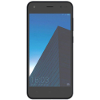
Cubot CheetahPhone vs Hisense F8 Mini
Quelle est la différence entre Cubot CheetahPhone et Hisense F8 Mini. Découvrez quel smartphone offre les meilleures performances.
Performance (Benchmarks)
| 2696 | PCMark for Android Work 2.0 | 2333 |
Caractéristiques
| Cubot CheetahPhone | Nom du produit | Hisense F8 Mini |
| Android 6.0 | Système d'exploitation (OS) | Android 7.0 |
| Bluetooth WLAN | Réseaux sans fil | Bluetooth WLAN |
| Yes, microUSB 2.0 | Interfaces / connecteurs | Yes, microUSB 2.0 |
Ecran
| 1920 × 1080 px | Résolution d'écran | 1280 × 720 px |
| IPS LCD | Type d’écran | TFT LCD |
| Yes | Multipoints (multitouch) capacitif | Yes |
| 5.5" | Taille écran | 5" |
Processeur (CPU)
| Up to 1.3 GHz octa-core ARM Cortex-A53 | Architecture CPU | Up to 1.3 GHz quad-core ARM Cortex-A7 |
| MT6753A | Processeur | SC9850 |
| Mali-T720 MP3 | GPU | Mali-T820 MP1 |
Mémoire
| 3072 MB | Mémoire RAM | 2048 MB |
| 32 GB | Capacité de stockage (ROM) | 16 GB |
| microSD | Carte mémoire | microSD |
Appareil photo
| Yes, 13 MP | Capteur photo | Yes, 8 MP |
| Yes, 8 MP | Capteur photo avant | Yes, 8 MP |
Communication
| GSM 850 / 900 / 1800 / 1900 | 2G | GSM 850 / 900 / 1800 / 1900 |
| HSDPA 900 / 1900 / 2100 | 3G | HSDPA 2100 |
Géolocalisation
| Yes | GPS | Yes |
Batterie
| 3050 mAh | Capacite de la batterie | 2380 mAh |
Design
| 74.9 / 149 / 8 mm | Dimensions | 72 / 143 / 8 mm |
| g | Poids | 141 g |